
Table of Contents
The Shadow Spreadsheet: Why Your Team Trusts a Side File More Than Your Accounts
When your team says "that's what Xero says, but the real numbers are in this spreadsheet", you don't have a spreadsheet problem. You have a trust problem. This post explains where shadow spreadsheets come from, the hidden risks they create for UK SMEs, and how to make them unnecessary.

July 9, 2026
The Shadow Spreadsheet: Why Your Team Trusts a Side File More Than Your Accounts
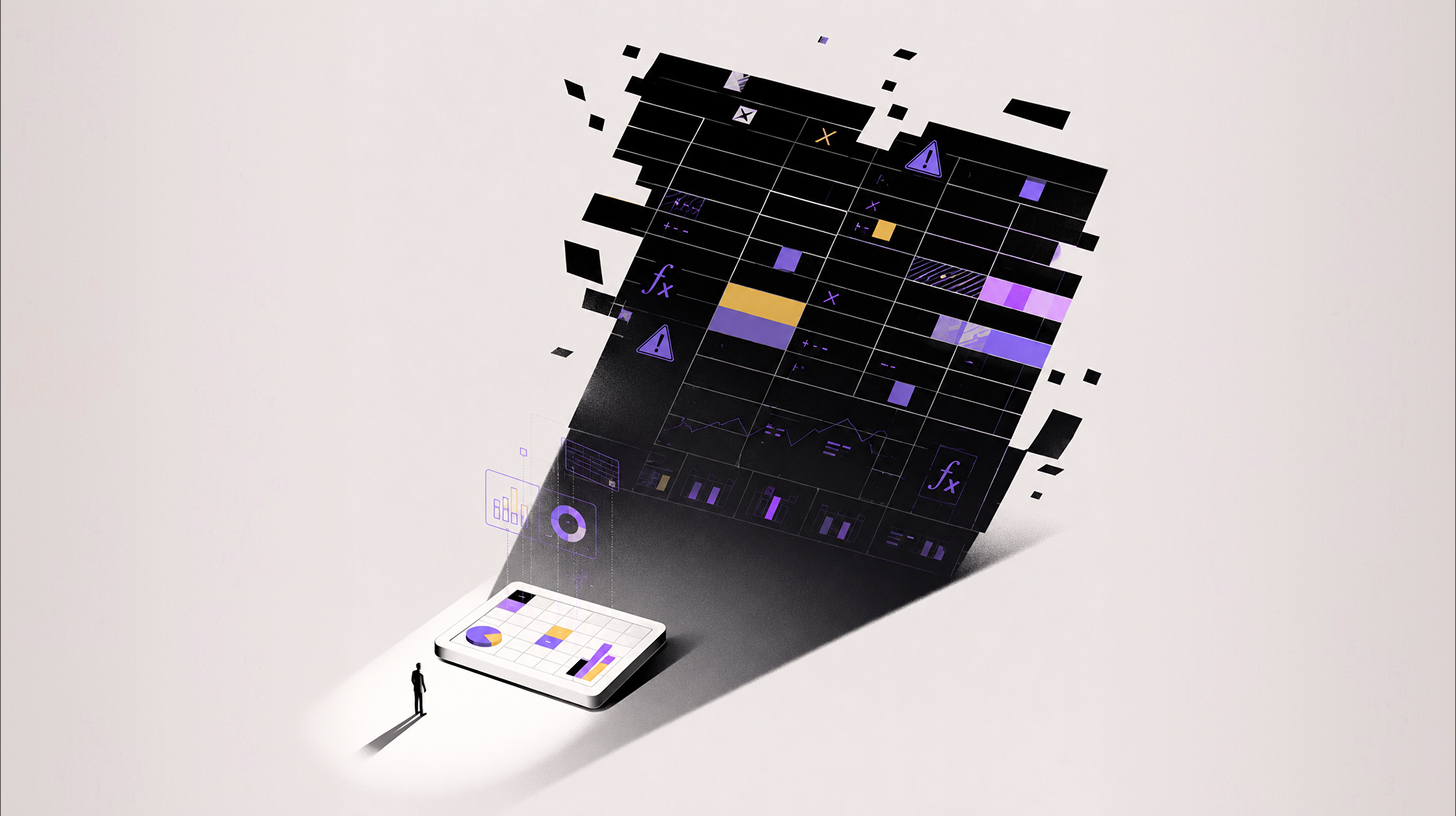
A shadow spreadsheet is an unofficial file that runs alongside a business's accounting system and gradually becomes the version of the numbers that people actually trust and use for decisions. It is one of the clearest warning signs in a growing UK SME that the official financial records have stopped being useful, and it carries real risks for compliance, business continuity, and company value.
If you have ever heard someone in your business say, "that's what Xero says, but the real numbers are in this spreadsheet," you already know the problem exists. And it is worth being precise about what that problem actually is.
It is not a spreadsheet problem. It is a trust problem.
What Is a Shadow Spreadsheet and Why Do UK Businesses Rely on Them?
The shadow spreadsheet goes by many names. The side file. The management version. The "real" numbers. The file the finance director maintains separately and updates by hand every month. Whatever it is called in your business, it serves the same function: it is the place people go when they do not trust what the accounting system is telling them.
The data is in Xero, or Sage, or whatever cloud accounting platform the business runs on. The ledger exists. The transactions are recorded. But no one relies on it for decisions, because at some point the official record stopped reflecting how the business actually works.
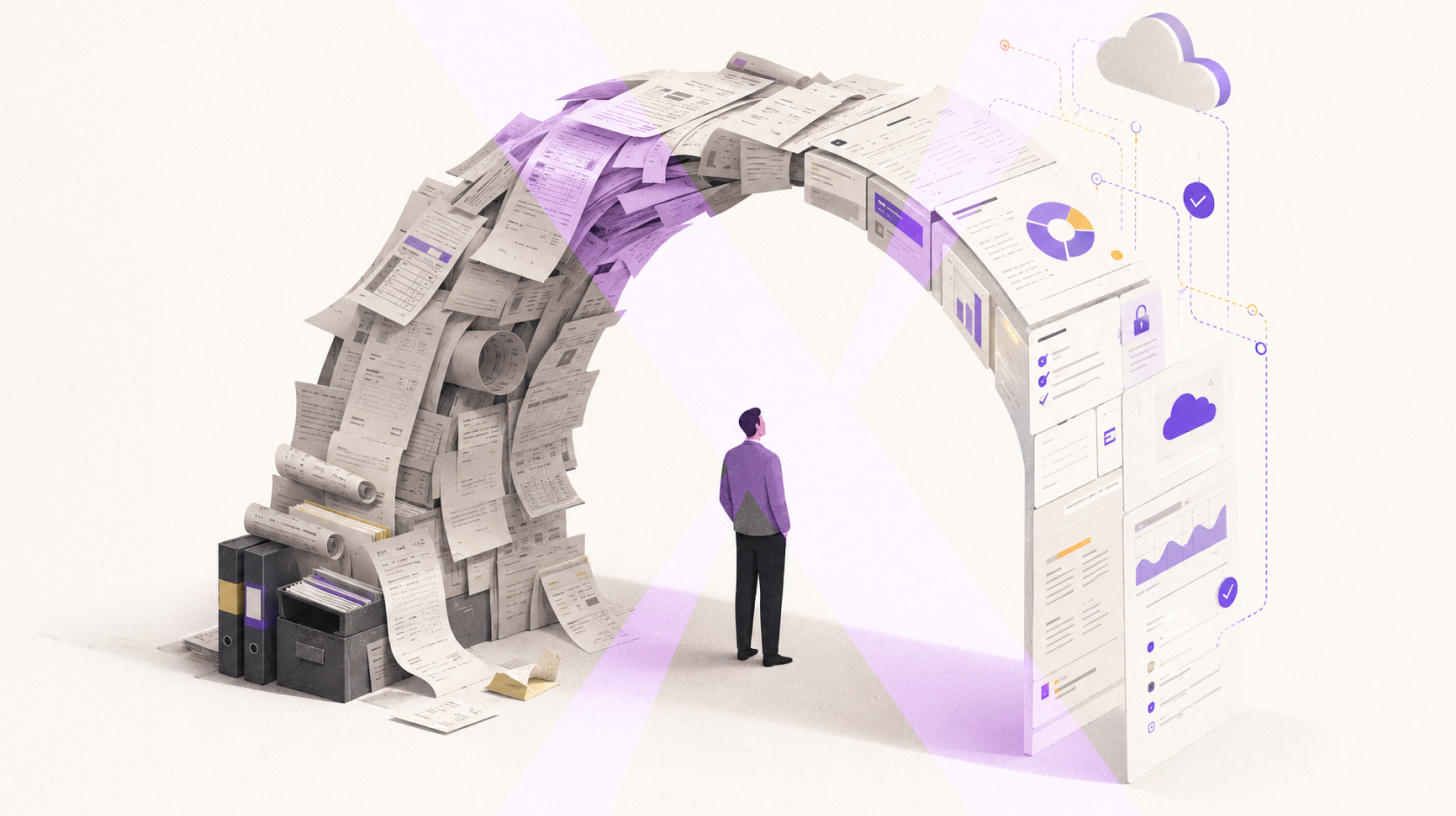
So someone built a spreadsheet to bridge the gap. And over time, the bridge became the road.
The official system holds the data. The shadow spreadsheet holds the trust. When those two things separate, the business is running on a version of reality that no system can verify.
How Shadow Spreadsheets Start in Growing Businesses
Almost no shadow spreadsheet begins as a problem. They begin as solutions.
The ledger report does not quite show the right breakdown. The cost centres were set up three years ago and no longer reflect how the business operates. The management team wants to see gross margin by product line, but the chart of accounts was never structured to support that view. So someone, usually a capable and well-intentioned finance person, builds a spreadsheet to produce the view the business needs.
At first, it works beautifully. The management team finally sees the numbers the way they need to see them. Decisions improve. The spreadsheet becomes indispensable.
Then the conditions change. The person who built it moves on, or changes role, and takes the logic with them. The business grows, and the spreadsheet grows with it. Formulas are layered on top of formulas. Adjustment rows appear. Manual overrides accumulate, each one made for a good reason at the time, none of them documented.
What started as a helpful workaround has quietly become something else entirely: a parallel accounting system that no one officially owns and no one fully understands.
At that point, the business has two versions of the truth. The official record, which is complete but distrusted. And the shadow version, which is trusted but fragile. This is exactly the kind of disconnect we explored in the post on the translation problem, where the same fact ends up meaning different things in different places. The shadow spreadsheet is that disconnect taken to its logical conclusion.
The Three Hidden Risks of Running a Shadow Spreadsheet
The danger of a shadow spreadsheet is that it works well enough, for long enough, that the business stops noticing the risk it carries. Here are the three risks that matter most.
1. Fragility and Key-Person Dependency
A shadow spreadsheet is typically understood by one person, or at most two. The logic lives in their head, not in documentation. If that person leaves, falls ill, or is simply unreachable during a critical week, the business loses its working view of its own finances.
The official records remain intact, but no one knows how to interpret them in the way the management team has come to depend on. The business is suddenly flying on instruments it cannot read.
2. A Single Point of Failure
A spreadsheet is a file. Files get overwritten, corrupted, saved to the wrong version, or lost. When the management information for a period lives in a single file, the loss of that file can mean the loss of that period's working numbers.
The raw data still sits in the accounting system, but reconstructing the shadow spreadsheet's specific view of it, with all its adjustments and manual logic, is often impossible without the person who built it. The business is one bad save away from losing months of management insight.
3. Buyer, Lender, and Investor Scrutiny
This is the risk that costs the most, and it surfaces at the worst possible moment.
When a UK SME raises investment, applies for a commercial loan, or begins a sale process, buyers and lenders ask for management accounts. The first thing a competent buyer's advisor does is check whether those accounts tie back to the statutory records.
If the management numbers come from a shadow spreadsheet rather than directly from the accounting system, the questions begin. Why don't the management figures reconcile to the ledger? What manual adjustments are being made, and on what basis? Who verifies them?
These are not comfortable conversations. We have seen them slow transactions, reduce valuations, and in some cases derail deals entirely, not because the business was poorly run, but because the numbers could not be trusted at the moment they mattered most. A business that cannot produce clean, system-generated management accounts on demand is a business that looks riskier than it actually is.
The Cure Is Not Banning Spreadsheets
It would be easy to conclude that the answer is to ban spreadsheets. It is not.
Spreadsheets are not the enemy. Used correctly, they are among the most powerful analytical tools a finance team has. The problem is never the spreadsheet itself. The problem is the reason the spreadsheet became necessary in the first place.
The cure is to remove that reason. In practice, that means addressing five things.
A better chart of accounts. One that reflects how the business actually operates today, with the cost centres, departments, and categories the management team genuinely needs, rather than the structure someone set up when the business was half its current size.
Cleaner master data. Consistent naming, consistent coding, consistent categorisation, so that the same customer, supplier, or cost always appears the same way. This is the foundation everything else is built on.
Bank feeds reconciled regularly. So the ledger reflects reality in near real time, rather than lagging weeks behind and forcing people to look elsewhere for current numbers.
The CRM connected to invoicing. So revenue data flows from a single source of truth rather than being re-entered, with all the version drift that manual re-entry introduces.
Dashboards built from source data. So management information is pulled directly from the systems of record, not assembled by hand in an intermediary file that only one person can maintain.
When these five things are in place, something important happens. The ledger becomes useful again. Management accounts can be produced directly from the accounting system, reconciled and trustworthy. And the spreadsheet is freed to do what spreadsheets are genuinely excellent at: analysis, scenario modelling, and one-off deep dives, rather than secretly running the business.
One number. One source. One conversation. That is what a finance function looks like when the shadow spreadsheet is no longer needed.
If you want to understand what happens when shadow spreadsheets are left in place and the underlying data quality continues to erode, the post on how bad data hides inside polished reports covers the next stage of this problem. And if your board pack currently depends on manual assembly from files like these, the post on manual reporting risk is worth reading alongside this one.
About Elixir:
Elixir is a chartered accounting and financial intelligence practice based in Aldershot, Hampshire, serving UK SMEs and self-employed professionals nationwide. We combine fixed-fee tax compliance, strategic advisory, and integrated cloud accounting systems to give founders one trustworthy source of truth, not a side file.
share article
OTHER’s favourites

Subscribe to Elixir
Join 5,000+ leaders getting weekly insights
Thank you! Your submission has been received!
Oops! Something went wrong while submitting the form.


Meet The Expert Team Guiding You at Every Step
About Elixir

