
Table of Contents
Why Your Business Enters the Same Sale Six Times & What It's Costing You
In many UK SMEs, a single sale gets manually entered into six or more separate systems. Each entry is a chance for an error and those errors compound. This post explains why human beings make poor middleware, what the rekeying problem actually costs, and what integrated systems do instead.

June 16, 2026
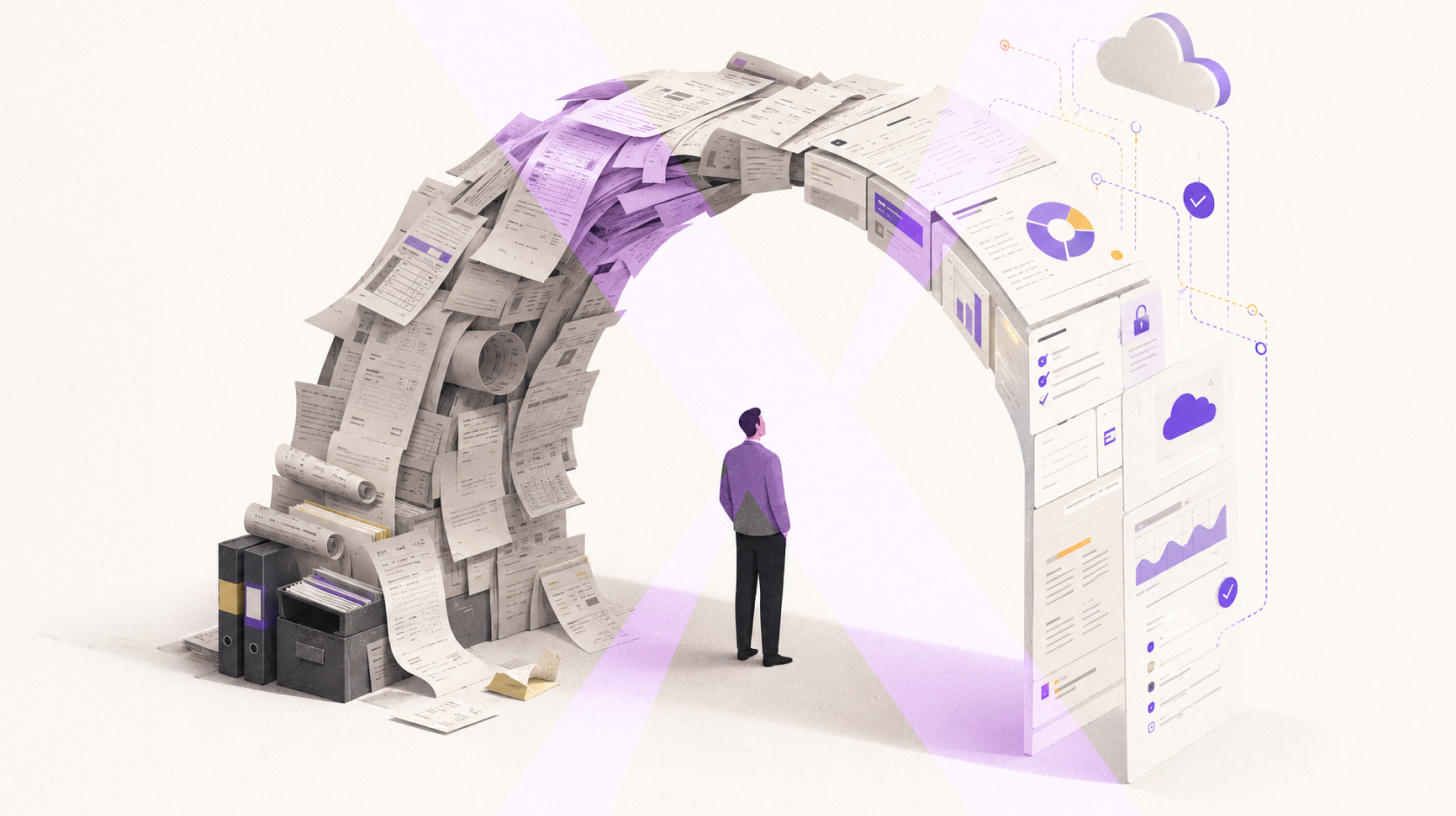
Manual data entry rekeying occurs when the same piece of business information: a sale, a customer record, an invoice value is copied by hand from one system into another, rather than flowing automatically through an integration. It is one of the most common sources of financial error, compliance risk, and operational waste in growing UK SMEs, and it is almost entirely invisible until something goes wrong.
A sale should enter your business once. In most UK SMEs, it enters six times. And each time it does, a human being has to get it exactly right.
They almost never do not because they are careless, but because the system was never designed for reliability at scale. This post breaks down where those six entry points are, what each one costs, and what your business looks like when the rekeying problem is fixed.
Why One Sale Travels Through Six Systems in Most UK Businesses
A sale is, in its simplest form, a single fact: a customer has agreed to buy something for an agreed price on agreed terms. In a business with integrated systems, that fact is captured once and flows automatically to every downstream system that needs it.
In the majority of UK SMEs, that fact travels by hand.
Here is the typical journey. The salesperson closes the deal and enters it into the CRM. Then someone from finance manually raises the invoice in Xero or Sage, retyping the customer name, the value, and the payment terms. The delivery or project team updates a job tracker separately. Finance manually updates the cash flow forecast. Operations updates the capacity plan. And somewhere, usually late at night, the founder or FD updates the spreadsheet where the real numbers actually live.
Six people or six steps. One sale. Six separate chances for something to be entered slightly differently.
- Wrong customer name , which creates the translation problem we covered in the previous blog.
- Wrong VAT treatment which surfaces in a VAT return that needs correcting.
- Wrong payment terms, which means a debtor who genuinely believes they have 30 days when you agreed 14.
- Wrong product code, which breaks your margin analysis.
- Wrong value, which means a reconciliation that will not close and a month-end that takes longer than it should.
- Wrong delivery date, which means operations is working to a timeline that does not match what the customer was promised.
None of these errors is dramatic on its own. Together, they are the reason your finance team is always behind, your month-end always needs explaining, and your management accounts always come with a footnote.
The Real Problem: Human Beings Are Not APIs
The most important thing to understand about the rekeying problem is that it is not a people problem. The team members doing this work are not careless. They are diligent, experienced professionals doing exactly what the system is asking them to do.
The problem is what the system is asking them to do.
Reliably replicating structured data across multiple platforms, without error, indefinitely, at scale, is not something human beings are designed to do well. It is precisely what application programming interfaces (APIs) were invented for. APIs do not transpose digits. They do not use last month's payment terms by mistake. They do not forget to update one of the six systems because a phone call interrupted them at the critical moment.
A UK SME at £500,000 turnover can absorb the rekeying problem because the transaction volume is low and the founder usually knows every deal personally. They catch the errors before they compound.
At £2 million, the transaction volume has multiplied. The founder is no longer close to every deal. The errors start compounding before anyone catches them. Month-end starts taking longer. The VAT return needs checking twice.
At £5 million, the rekeying problem has become structural. The finance team is permanently behind. Month-end requires a narrative to explain the numbers rather than simply presenting them. Management accounts arrive late and with caveats. Decisions are being made on figures that are almost certainly approximately right — which in a business of that scale means decisions that could be significantly wrong.
This is the rekeying problem at its most dangerous: not the individual errors, but the accumulated erosion of trust in the numbers the business depends on.
How Rekeying Errors Compound Into Real Financial Consequences
A single rekeying error is easy to dismiss. A transposed digit. A wrong code. A field left at its default value. The individual cost appears small.
But financial data errors do not stay small. They compound through every process that touches them downstream.
A wrong VAT code on an invoice does not just affect one invoice. It affects the VAT return for that quarter, which HMRC may query, which then requires your accountant's time to correct and resubmit. In the worst cases and we have seen this with UK SMEs across Hampshire and the wider South East: a pattern of VAT coding errors triggers an HMRC compliance review. The original error that caused the review cost seconds to make. The review costs months to resolve.
Wrong payment terms have a similar compounding effect. A customer who receives an invoice showing 30-day terms when you agreed 14 is not doing anything wrong when they pay on day 30. They are following the document they were given. Your business, meanwhile, has a cash gap it did not plan for, a debtor who does not respond to chasing because they believe they are within terms, and a cash flow forecast that is now 16 days off because the error was never corrected in the system.
Multiply that across a year of transactions at a business with 200 or more invoices, and the cumulative cash impact is not trivial. More significantly, the cumulative accuracy impact makes management accounts less and less trustworthy over time until the business is running on numbers that feel right but may not be.
What the Rekeying Problem Costs in Staff Time Alone
Separate from the error cost, the rekeying problem has a straightforward time cost that is worth quantifying.
If each of the six manual entry steps takes an average of eight minutes, one sale costs 48 minutes of human time across the business. At a business processing 20 sales per month, that is 16 hours of manual entry per month , the equivalent of two full working days spent on work that adds no commercial value and introduces material risk.
At an all-in cost of £30 per hour for the average operational team member, that is £480 per month, or £5,760 per year, just in direct time cost. Before errors. Before correction time. Before the management distraction of investigating reconciliations that will not balance.
For a UK SME in the £1 million to £5 million range, this is not a marginal efficiency gain. It is a structural cost that is being paid every month, invisibly, from a budget line that does not exist.
What Properly Integrated Systems Do Instead
When a CRM is connected to an accounting system, and the accounting system is connected to the delivery platform, and the delivery platform feeds the cash flow forecast, the sale enters the business once.
The deal closes in HubSpot. An invoice is automatically created in Xero with the correct customer name, because it came from the same customer record the correct value, the correct payment terms, and the correct VAT treatment. The delivery system sees the confirmed job. The cash flow forecast updates with the expected receipt on the correct date. The management dashboard reflects the new order in real time.
One entry. Six outcomes. Zero rekeying.
This is not just an efficiency gain, though the time saving is real and measurable. It is fundamentally a data quality gain. The same fact, captured once at the point of origin, carries through the business without being interpreted, approximated, or mis-transcribed by anyone along the way.
There is no version drift, where the value in the CRM is slightly different from the value in Xero because someone rounded differently. There is no dependency on the one person who knows how the spreadsheet works. There is no month-end mystery where the sales total in the CRM does not match the revenue in the accounts.
The business stops retyping reality. And when a business stops retyping reality, its numbers start to be trusted. And when numbers are trusted, decisions improve.
How to Map Your Six Entry Points: A Practical Starting Point
Before buying any new software or commissioning any integration build, the most valuable exercise a UK SME can do is map the current journey of a single sale through the business.
Take your most recent completed sale. Write down every system it touched, in order, from the moment the deal was agreed to the moment the payment was reconciled in your bank account. For each system, note who entered the data, how long it took, and whether they were copying it from another system or creating it fresh.
What you will find, almost certainly, is a sequence of manual transfers that looks something like the six-step journey described above. Some businesses find seven or eight steps. Occasionally, in more complex operations, more than ten.
Each transfer on that map is an integration opportunity. The question is not whether to connect them, it is which connection to make first to eliminate the most risk and recover the most time.
For most UK SMEs, the answer is the same: connect the CRM to the accounting system. When a deal closed in HubSpot automatically creates a draft invoice in Xero or Sage, the first two or three manual steps disappear in a single integration. Customer name, deal value, payment terms, and VAT treatment flow directly from the source record. No retyping. No version drift. No 8-minute manual entry process repeated 20 times a month.
That one connection is typically where the rekeying problem is cut by more than half. Build from there.
If you are at the stage where you are still deciding which system should own the sale in the first place, the post on data ownership covers exactly that decision and why getting it right before any integration work begins is what separates projects that deliver from those that disappoint.
About Elixir
Elixir is a chartered accounting and financial intelligence practice based in Aldershot, Hampshire, serving UK SMEs and self-employed professionals nationwide. We combine fixed-fee tax compliance, strategic advisory, and integrated cloud accounting systems to give founders financial clarity without the complexity.
share article
OTHER’s favourites


Subscribe to Elixir
Join 5,000+ leaders getting weekly insights
Thank you! Your submission has been received!
Oops! Something went wrong while submitting the form.


Meet The Expert Team Guiding You at Every Step
About Elixir

