
Table of Contents
Your Business Has a Translation Problem, Not a Data Problem
UK SMEs don't lack data, they lack agreement between their systems. When 'Your company name Ltd' becomes three different names across your CRM, ledger, and payments platform, your team spends days on translation work that should take minutes.

June 15, 2026
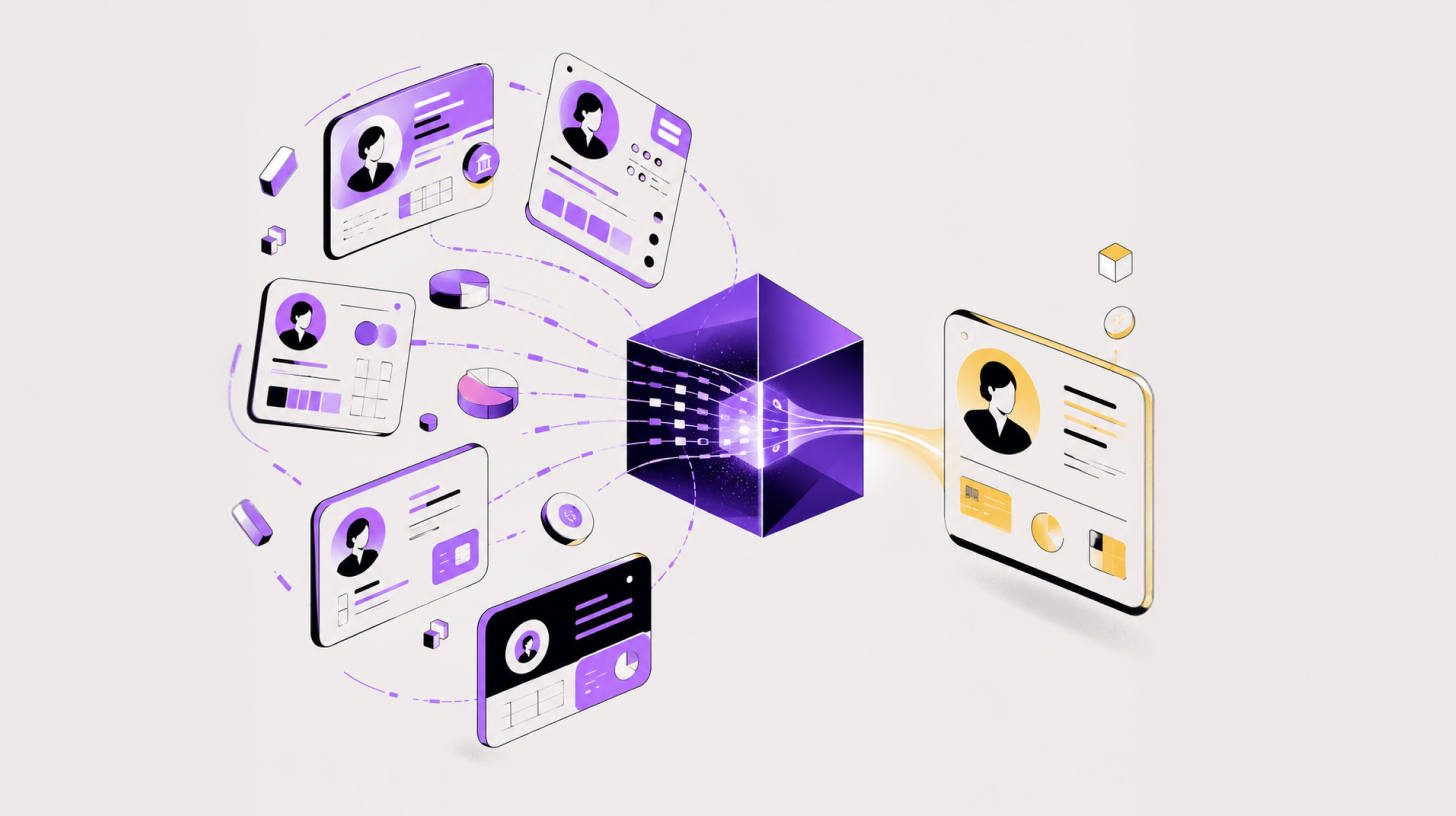
A data translation problem occurs when the same customer, supplier, or transaction is recorded differently across multiple business systems — making it impossible to get a single, reliable answer without manual reconciliation. It is one of the most common and costly inefficiencies in UK small businesses, and it almost never shows up on a risk register.
Most UK business owners believe their data problem is a volume problem. Not enough information. Not the right reports. Not enough software.
The reality, for the vast majority of growing UK SMEs, is the opposite. There is plenty of data. The problem is that the same piece of data means something slightly different in every system it touches.
This is a translation problem. And it is almost certainly costing your business more than you realise — not in a single visible line item, but spread invisibly across your team's working hours, your decision-making speed, and your compliance exposure.
Why Inconsistent Customer Records Cost UK SMEs Days of Wasted Work
Here is a scenario that will be familiar to most UK business owners.
You want to know who your top ten customers are by gross margin. Simple question. Should take five minutes.
Instead, the sales team exports from the CRM. Finance exports from the accounting ledger. Someone pulls payment data from Stripe or GoCardless. Someone else checks delivery costs in the operations system. Then a spreadsheet appears. Three days later.
The reason it takes three days is not because your data does not exist. It is because the same customer is recorded four different ways across four different systems.
Your CRM says: Smith Engineering Ltd. Xero says: Smith Engineering Limited. Stripe says: SMITH ENG. Your stock system uses a customer reference code. None of those entries is technically wrong. But none of them agrees.
So before anyone can answer the original question, someone has to manually reconcile four versions of the same fact. That person is usually your most experienced finance or operations person. And they are spending their best working hours doing translation work, not analysis.
That is not business intelligence. That is translation work and translation work is invisible, expensive, and almost never treated as the risk it actually is.
What Translation Work Actually Costs a Growing UK Business
Translation work is expensive precisely because it hides in plain sight. It looks like admin. It sounds like 'can you just pull a report for me?' It appears on no one's risk register and shows up on no budget line.
But consider what it actually costs when you add it up.
A senior finance manager or operations lead spending three days per month reconciling data between systems : cross-referencing exports, standardising naming conventions, checking whether the Xero customer record matches the HubSpot contact- is spending approximately 36 working days per year on translation work alone.
At a conservative all-in day rate of £400 for a senior person, that is roughly £14,400 per year. Spent not on analysis, not on insight, not on decisions — but on making the same fact mean the same thing in two different places.
And the three days of effort still produces a report that is, at best, approximately correct. Manual reconciliation introduces human error. A transposed reference number. A customer matched to the wrong record. A cost attributed to the wrong entity. Human error in financial data compounds quickly and silently.
We have seen businesses go into HMRC compliance reviews where the same supplier appeared under three different names across the ledger — the result of years of manual entry without an agreed naming standard. The work required to reconcile the records and satisfy the enquiry cost significantly more than establishing the naming convention would ever have done.
Why This Is a Management Decision, Not an IT Fix
The translation problem almost always starts with a master data problem.
Master data is the core reference information your business depends on to function: customer names, supplier names, product or service codes, VAT treatment categories, cost centre classifications. It is the vocabulary your business uses to describe itself.
When master data is inconsistent — when there is no agreed standard for how a customer should be named or how a product should be coded ,,every system that touches that data creates its own interpretation. The CRM creates a record the way the salesperson entered it. The accounting system creates a record the way the bookkeeper set it up. The payment processor uses whatever name appeared on the first transaction. None of them check against each other, because no one told them they had to.
Fixing this is not an IT task. No software update will solve a problem that begins with the absence of a management decision.
Someone has to decide: what is the correct, agreed name for this customer? Which system owns that definition? What format does it take ? Limited or Ltd, abbreviated or in full? How does every other system receive and display that definition consistently over time?
That decision sounds small. It unlocks enormous downstream value in reporting speed, compliance confidence, and data quality across the entire business.
How to Run a Master Data Audit in an Afternoon
Before any technology project, before any integration build, the single most valuable exercise a UK SME can do is a master data audit. It costs nothing except time, and it will show you exactly where your translation problem lives.
Start with the five most important customers in your business. For each one, check how they are named in every system that records them- your CRM, your accounting software, your payment processor, your operations or delivery system. Write down exactly what each system says.
Then do the same for your five most important suppliers, and for your core product or service lines.
What you will find is a map of every place where the same entity has more than one name. Every mismatch on that map is a translation point — a place where your team has to manually bridge the gap between what one system knows and what another expects. Those mismatches are your integration priority list.
The second thing the audit tells you is which system is most reliable. The system with the most complete, most consistently formatted records for a given entity type should be designated as the source of truth. For most UK SMEs, the CRM should own the customer record and the accounting system should own the invoice and payment trail. Once that ownership is agreed, every other system should receive and display the record from the owning system, not create its own version.
One afternoon. Five customers. Five suppliers. Clear ownership assigned. That is the foundation of every integration project that actually works.
How Data Integration Removes the Translation Layer
The purpose of data integration at its most fundamental level is to ensure that a single fact means the same thing in every system that touches it.
One customer record. One agreed name. One reference, applied consistently from CRM to invoicing to payments to management reporting. When a deal closes in HubSpot, the customer name that flows to Xero is identical , because the systems are connected, and the CRM owns the definition.
When that is in place, the three-day translation exercise becomes a five-minute query. The management report refreshes automatically. The top-ten-customers-by-margin question gets answered before the meeting starts, not three days after it ends.
Data sits in systems. Insight appears when those systems agree.
For most UK SMEs, the highest-value first integration is between the CRM and the accounting system. When a customer record created in HubSpot automatically becomes the customer record in Xero same name, same reference, same payment terms, the first and most costly translation layer disappears. That single connection typically eliminates the majority of the manual reconciliation work that was previously consuming your finance team's most capable hours.
What the Translation Problem Connects To
The translation problem rarely exists in isolation. It is usually one layer of a broader disconnection between the systems your business runs on.
The same inconsistency that makes your customer margin report take three days is the same inconsistency that makes month-end slower than it should be, and the same inconsistency that makes management accounts feel unreliable. These problems share a root cause: data that is not owned, not standardised, and not connected.
In the first post in this series, we looked at what it means to be genuinely data-driven versus running on five disconnected tools. In the next post, we look at the six-entry problem — how a single sale gets manually entered into six separate systems, and what happens to accuracy each time a human being acts as the bridge between them.
If month-end already feels like a reconstruction exercise in your business, the post on month-end close is worth reading alongside this one. The two problems are closely connected — translation errors accumulate throughout the month and reveal themselves in full when you try to close the books.
share article
OTHER’s favourites


Subscribe to Elixir
Join 5,000+ leaders getting weekly insights
Thank you! Your submission has been received!
Oops! Something went wrong while submitting the form.


Meet The Expert Team Guiding You at Every Step
About Elixir

.svg)


